

About Us
About 653 Kilo Sierra LLC
653 Kilo Sierra LLC is a California limited liability company registered under Entity No. 202357312061, with its address at 1237 Pasatiempo Road, Palm Springs, CA 92262. The company exists to hold assets, not to operate a storefront, agency, or service business.
Bayotech, Inc., based at PO Box 881584, San Diego, CA 92168, manages the company's affairs. This page explains the background, the reasoning behind the structure, and the principles that guide how the holdings are run.
The company's purpose in plain terms
A holding company owns things. It may own property, membership interests in other entities, intellectual property, or financial assets. It does not typically sell products to customers or deliver services under its own name.
That is the role 653 Kilo Sierra LLC plays. The assets are the business. Everything else, from filings to contracts to records, exists to keep ownership clear and defensible.
Real property and interests
Title to real property, and membership or ownership interests in other entities, held in the name of the LLC or a subsidiary created for that purpose.
Intellectual property
Names, marks, and rights that the company owns and licenses or holds without operating a public-facing business around them.
Financial assets
Accounts, notes, and similar holdings that the company keeps on its own books rather than placing with the public.
Records that hold it together
Operating agreements, consents, contracts, and filings — the paperwork that makes each ownership claim traceable later.
What the company does not do matters as much as what it does. It does not run a storefront, sell products to the public, or advertise services under its own name. The assets are the business, and the paperwork is what keeps them legible.
Where the company sits
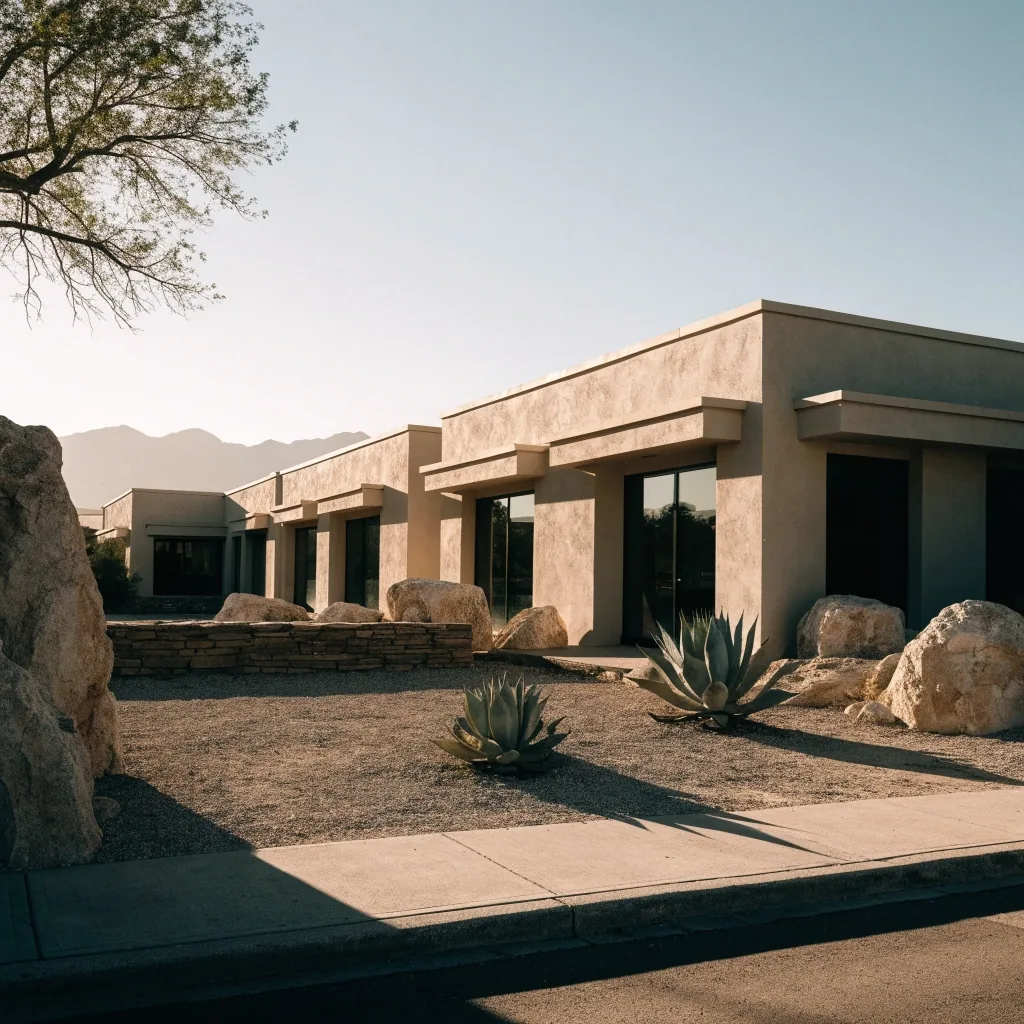
Palm Springs is the company's registered location, in Riverside County, California. The mailing and management address for Bayotech, Inc. is in San Diego. Having management in a different city than the registered address is ordinary for holding companies and does not affect the entity's legal home.
California matters here for more than scenery. The state's LLC rules, franchise tax, and statement-of-information requirements define what the company files and when. Riverside County records govern any real property held in the area.
Review governance and compliance- Registered address
- 1237 Pasatiempo Road, Palm Springs, CA 92262, USA
- Manager's mailing address
- Bayotech, Inc., PO Box 881584, San Diego, CA 92168, USA
- State of formation
- California limited liability company, Entity No. 202357312061
- Records jurisdiction
- Riverside County, for any real property held in the area
Who manages the company
Bayotech, Inc. is the manager. Its role is administrative and operational: maintaining the entity in good standing, coordinating with professional advisers, keeping records current, and carrying out decisions approved by the ownership.
This arrangement separates two things people often blur together. The LLC owns. Bayotech manages. The manager's authority comes from written agreements, not from informal understanding, and its scope is limited to what those documents allow.
Owns
653 Kilo Sierra LLC holds title, receives income from holdings, and transfers interests when the ownership decides to.
Manages
Bayotech, Inc. handles entity upkeep, adviser coordination, records, and execution of approved decisions.
What the split prevents
The manager cannot rewrite the terms of ownership on its own say-so, and the owners are not left guessing who is responsible for filings, contracts, or day-to-day record keeping. Both sides work from the same written agreements, which is what makes the arrangement reviewable rather than assumed.
What asset holding means and does not mean
It means the company can hold title, receive income from holdings, enter contracts related to them, and transfer interests when the ownership decides to. It can borrow against assets and lend between entities where agreements support it.
It does not mean the company sells investments to the public, offers advisory services, or operates as a broker. Nothing on this site is investment advice or a solicitation. Visitors looking for a wealth management firm are on the wrong page.
Read the management approachWithin scope
- Holding title to real property and other assets
- Receiving income generated by those holdings
- Entering contracts connected to what it owns
- Transferring or financing interests by ownership decision
Outside scope
- Selling investments to the public
- Offering advisory or brokerage services
- Soliciting capital or investment clients
- Running a retail or service business under this name

Principles behind the structure
Three ideas shape how the company is organized. First, ownership should be traceable: it should be possible to follow any asset from title to the entity that holds it. Second, liability should be contained, with assets in separate containers where the situation warrants. Third, records should be good enough that an accountant, an attorney, or a successor can pick up the file and understand it.
None of that is exotic. It is the baseline that separates a functioning holding structure from a stack of paper.
-
1 Traceable ownership
Any asset can be followed from title through to the entity that holds it, without gaps that need reconstructing later.
-
2 Contained liability
Where the situation warrants, assets sit in separate containers so one holding's exposure does not simply travel to the next.
-
3 Records others can read
An accountant, an attorney, or a successor should be able to open the file and understand the position without a guided tour.
What well-run holding companies have in common
Public examples are useful as reference points even when the scale is nothing alike. The discipline they share is visible in how ownership is divided and how it is recorded.
- Brookfield Corporation
- Owns and operates real assets through controlled entities across real estate, infrastructure, renewable power, and private equity. That breadth is possible because each piece sits in its own legal container with its own reporting.
- Simon Property Group, Inc.
- Concentrates on retail real estate ownership at national scale, with holdings organized so that ownership and day-to-day operation are not the same question.
- Crown Castle Inc.
- Owns communications infrastructure and leases it out. Different sector, same underlying discipline: the entity that owns is not the entity that operates, and the records show it.
Family and private holdings differ from institutional ones
Institutional managers answer to public shareholders or fund investors. The Carlyle Group Inc. and Hamilton Lane Incorporated operate under securities rules that private entities do not touch. Their governance is public because their capital is public.
A private holding company like 653 Kilo Sierra LLC answers to its own members. That means fewer disclosure obligations and more flexibility, but also more responsibility placed on the owners and the manager to keep the structure honest without outside scrutiny forcing it.
The trade is deliberate. Flexibility is worth having when the owners are willing to carry the record-keeping themselves and to keep the agreements current as holdings change.

How to read the rest of this site
Each page covers one part of the structure in more detail. Start with whichever question brought you here.
Direct inquiries
Questions the pages do not answer are welcome by phone or email during working hours, Monday to Friday, 9:00 AM – 6:00 PM. Unsolicited proposals are not reviewed.
- See the ownership structure Subsidiaries, intercompany agreements, and how ring-fencing is applied.
- Read the management approach How capital allocation and risk are handled across the holdings.
- Review governance and compliance Entity maintenance, filings, and the commitments that keep it in good standing.
- Frequently asked questions Short answers on the entity, its manager, and what the company does and does not do.